Wet Bar vs. Dry Bar: Which Is Right for You?
If you're finishing your St. Louis basement and want a bar, the choice comes down to a wet bar or a dry bar. The short version of the wet bar vs dry bar decision: a wet bar wins if you entertain often and want a sink and running water downstairs, while a dry bar wins if you want a bar on a tighter budget without running new plumbing. Both give you a real gathering spot in your finished basement. The difference is water, and water changes the cost, the permits, and the construction work involved. Here is the honest breakdown so you can pick with confidence.
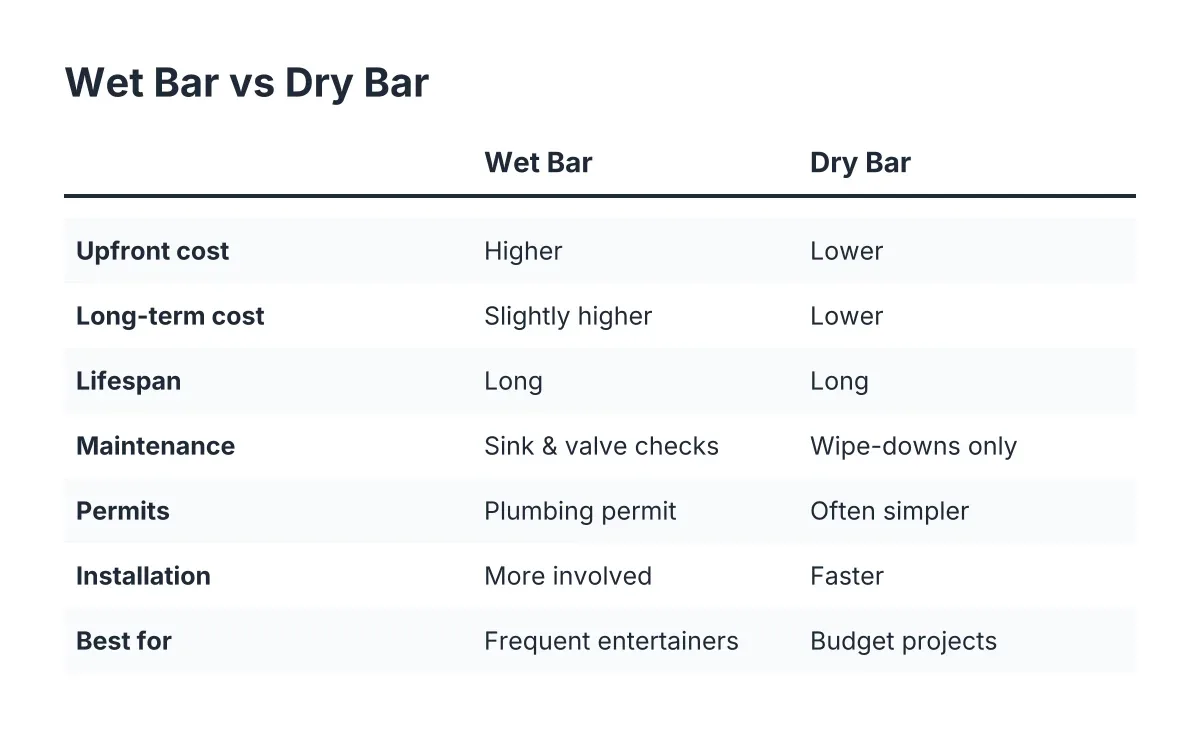
| Criterion | Wet Bar | Dry Bar |
|---|---|---|
| Upfront cost | Higher, plumbing rough-in and drain lines add real work | Lower, mostly cabinetry, countertop, and electrical |
| Long-term cost | Slightly higher, plumbing needs occasional attention | Lower, little to service beyond finishes |
| Lifespan | Long, as long as the plumbing stays sound | Long, comparable to any built-in cabinetry |
| Maintenance | Sink, drain, and shutoff valves need periodic checks | Wipe-downs and normal cabinet upkeep |
| Permits | Plumbing work typically requires a permit and inspection | Often simpler, electrical work may still need a permit |
| Installation | More involved, ties into supply and drain lines | Faster, fits nearly any basement layout |
| Best for | Frequent entertainers, full basement remodels | Budget-conscious projects, layouts far from existing plumbing |
Wet Bar: Strengths and Trade-offs
A wet bar is a bar with a working sink, which means running water and a drain right where you pour drinks. In a basement, that is a genuine upgrade for anyone who entertains. You rinse glasses, dump ice, and clean up spills without hauling anything upstairs. If you watch games downstairs with a crowd or host family holidays in the finished space, the sink earns its keep every single time.
The trade-off is construction. A wet bar needs supply lines and a drain, and in most St. Louis basements the drain is the hard part. If your bar sits near existing plumbing, such as below a kitchen or next to a basement bathroom rough-in, the work is manageable. If it sits across the basement from any existing lines, your contractor may need to open the slab or install an ejector pump to move wastewater up to the main drain. That is where wet bar budgets grow. Plumbing work also typically requires a permit and an inspection, which is a good thing for resale but adds steps to the process. We cover the plumbing and permit side in detail in our guide to wet bar with sink installation in St. Louis.
One more honest note: a wet bar disappoints when it is built for a lifestyle you do not actually have. If the bar will see a few gatherings a year, you may be paying for plumbing you rarely use. Be realistic about how often that sink gets turned on.
Dry Bar: Strengths and Trade-offs
A dry bar is everything a wet bar is, minus the sink and the plumbing. You still get cabinets, a countertop, shelving for glassware, and usually a beverage fridge on a dedicated outlet. For a lot of St. Louis homeowners, a dry bar covers most of what a basement bar actually needs to do: store drinks, hold snacks, and give the room a focal point.
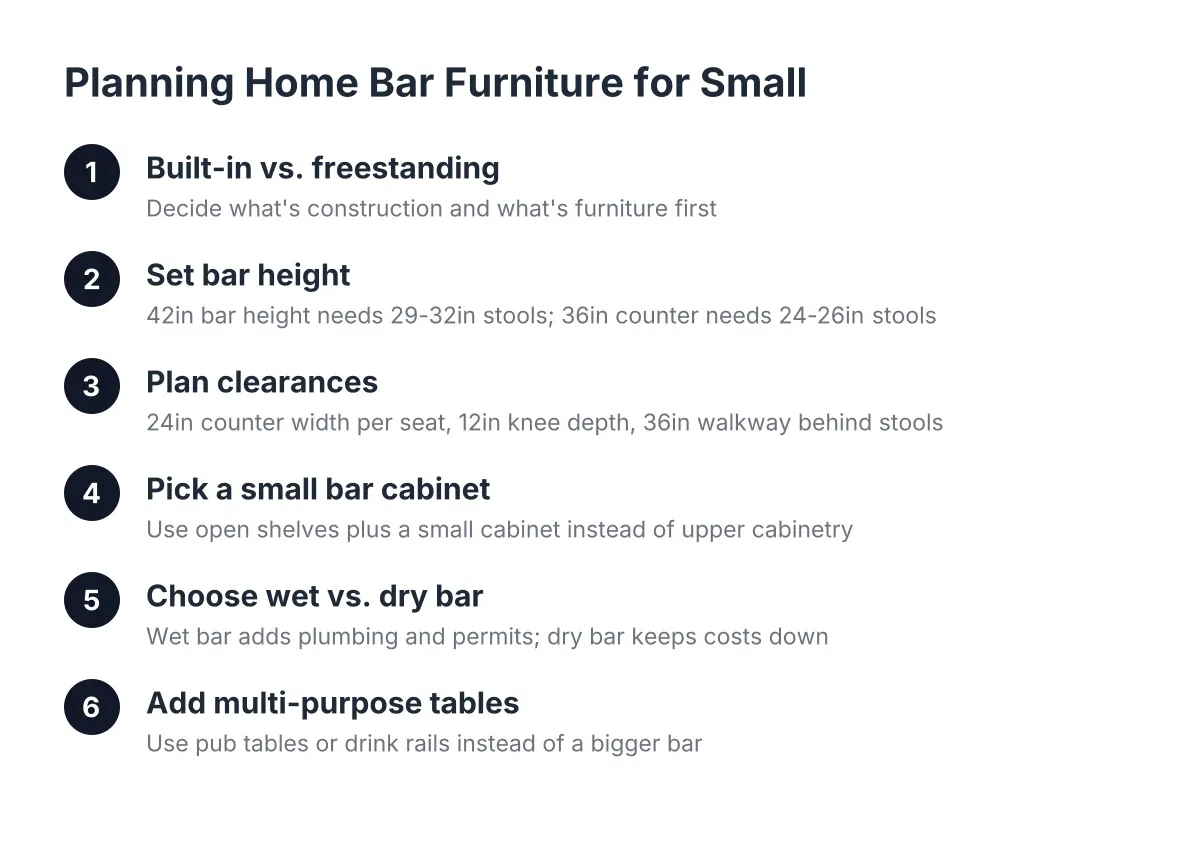
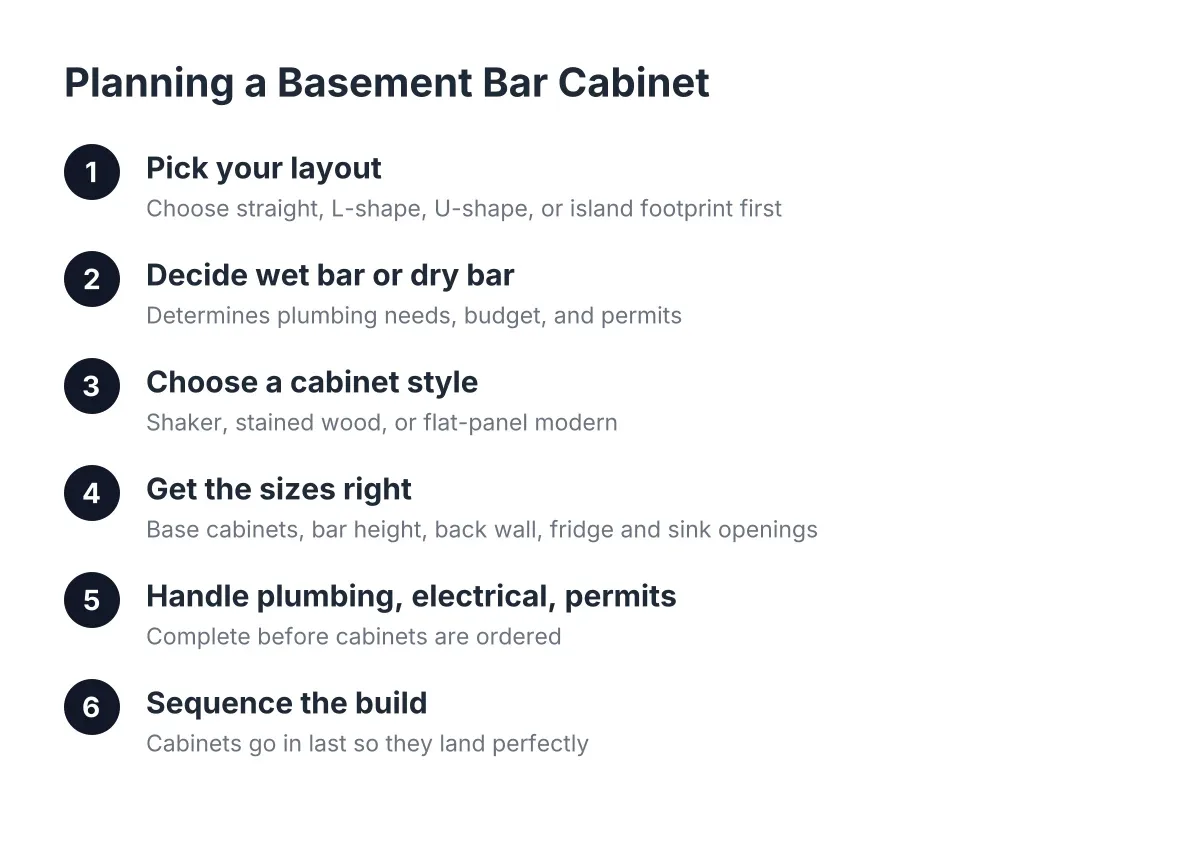
The strengths are cost and flexibility. Without supply and drain lines, a dry bar goes almost anywhere in the basement, including along a wall that has no plumbing within fifty feet. Installation is faster, the permit picture is simpler (though electrical work for outlets or a fridge circuit may still need one), and there is no drain to worry about later. If you are finishing the basement in phases or watching cost per square foot closely, a dry bar keeps the bar line item under control. Our basement bar cabinet guide walks through the cabinetry choices that drive most of a dry bar's cost.
Where a dry bar disappoints is cleanup. Every rinse, every dumped drink, and every sticky countertop means a trip upstairs to the kitchen sink. For occasional use, that is a minor annoyance. For weekly entertaining, it gets old, and it is the number one reason homeowners tell us they wish they had gone wet.
Wet Bar vs Dry Bar: The Deciding Factors
Cost drivers
A dry bar costs less upfront, nearly every time. Both bars share the same cabinetry, countertop, and electrical work, so the cost gap comes almost entirely from plumbing. The distance from your bar to existing supply and drain lines is the single biggest driver. A wet bar next to existing plumbing costs far less to build than the same bar on the opposite wall. Slab work, an ejector pump, and permit inspections all add to a wet bar's total. If you want a fuller picture of what moves the number, our breakdown of basement bar design cost covers the factors line by line.
Lifespan
Both options last as long as the finished basement itself when built right. Cabinets and countertops age the same whether or not a sink sits in them. The difference is risk: a wet bar adds plumbing connections in a below-grade space, and a slow leak under a basement bar cabinet can go unnoticed longer than one in a kitchen. Good workmanship, accessible shutoff valves, and a proper subfloor under the bar area keep that risk small.
Installation
A dry bar installs faster and disrupts less. It is carpentry and electrical, work that fits neatly inside a normal basement finishing schedule. A wet bar adds a plumbing rough-in phase, a permit application, and at least one inspection before walls close up. If the drain requires cutting the slab, expect concrete work before finishes go in. Neither is a reason to avoid a wet bar, but plan for the extra steps rather than being surprised by them.
Maintenance
A dry bar asks almost nothing of you; a wet bar asks for occasional attention. Dry bar upkeep is wiping counters and tightening a cabinet hinge now and then. A wet bar adds the normal life of a sink: checking the trap, keeping the drain clear, and knowing where the shutoff valve is. None of it is difficult. It is just more than zero, and in a basement it is worth staying on top of.
Situational fit
Match the bar to how you actually use your basement, not how you imagine using it. A wet bar fits a basement that functions as a second living space, with regular guests, movie nights, and game-day crowds. A dry bar fits a basement that hosts occasionally, sits far from existing plumbing, or shares a budget with bigger priorities like a basement bathroom or new flooring. Your overall basement bar design should follow the same logic: build for the weekends you actually have. For layout ideas on both sides, see our roundup of basement bar ideas for St. Louis homes.
Which Should You Choose?
Choose Wet Bar if:
- You entertain in the basement regularly and want cleanup handled downstairs.
- Your bar location sits near existing plumbing or a planned basement bathroom.
- You are doing a full basement remodel anyway, so the plumbing crew is already on site.
- You want the strongest resale story a basement bar can offer.
Choose Dry Bar if:
- Budget is the deciding factor and you want the most bar for the least cost.
- Your ideal bar spot is nowhere near existing supply or drain lines.
- You use the basement occasionally and a kitchen trip for cleanup does not bother you.
- You are finishing the basement in phases and may add plumbing later.
If you are on the fence, here is our plain advice: pick the wet bar when the plumbing is close and the budget allows, and pick the dry bar when either of those is a stretch. A dry bar you love beats a wet bar that blew the budget.
Common Questions
Do I need a permit for a basement bar in St. Louis?
It depends on the work involved. A wet bar involves plumbing, which typically requires a permit and inspection in St. Louis. A dry bar may still need an electrical permit for new outlets or a dedicated fridge circuit. A local contractor who does basement finishing regularly will handle the permit process as part of the job, so you are not guessing at city requirements.
Can I convert a dry bar to a wet bar later?
Yes, and it is a smart hedge if today's budget will not stretch. When weighing wet bar vs dry bar options, some homeowners rough in the plumbing during the basement finishing and cap it, then add the sink later. That approach costs more than a plain dry bar now but far less than opening finished walls down the road. Tell your contractor upfront so the rough-in goes in before drywall.
Does a wet bar add more resale value than a dry bar?
In most homes, a wet bar reads as the more finished feature to buyers, especially in a fully finished basement. That said, a clean, well-built dry bar adds appeal too, and buyers rarely penalize a basement for lacking a sink. Do not build a wet bar purely for resale; build it because you will use it, and let the resale benefit be a bonus.
Which one takes longer to build?
The dry bar, being carpentry and electrical work, fits inside a standard basement finishing timeline with no extra phases. The wet bar adds plumbing rough-in, permit review, and inspection, and if the drain requires slab work, concrete comes first. Additionally, the exact difference depends on your layout and how far the bar sits from existing lines, which is one of the first things a contractor will assess on a walkthrough.
If you need basement finishing, STL Basement Finishing can help.
Prefer to talk it through? Call (314) 916-6297 — a quick call is usually the fastest way to get a straight answer for your situation.