How to Get Basement Contractor Quotes in St. Louis and Compare Them Fairly
You just closed on a house with an unfinished basement, or you have been staring at yours for a year and finally want the bar, the extra bathroom, the space you actually pictured when you bought the place. The next move is to get basement contractor quotes, and this is where most St. Louis homeowners get burned. When comparing basement contractor quotes, you often find that one bid covers everything, another quietly leaves out the subfloor, and a third is a single number on a text message. This guide walks you through the process step by step: what to ask, what a real quote includes, and how to line up three bids so you are comparing the same project, not three different ones.
Step 1: Define the Project Before You Call Anyone
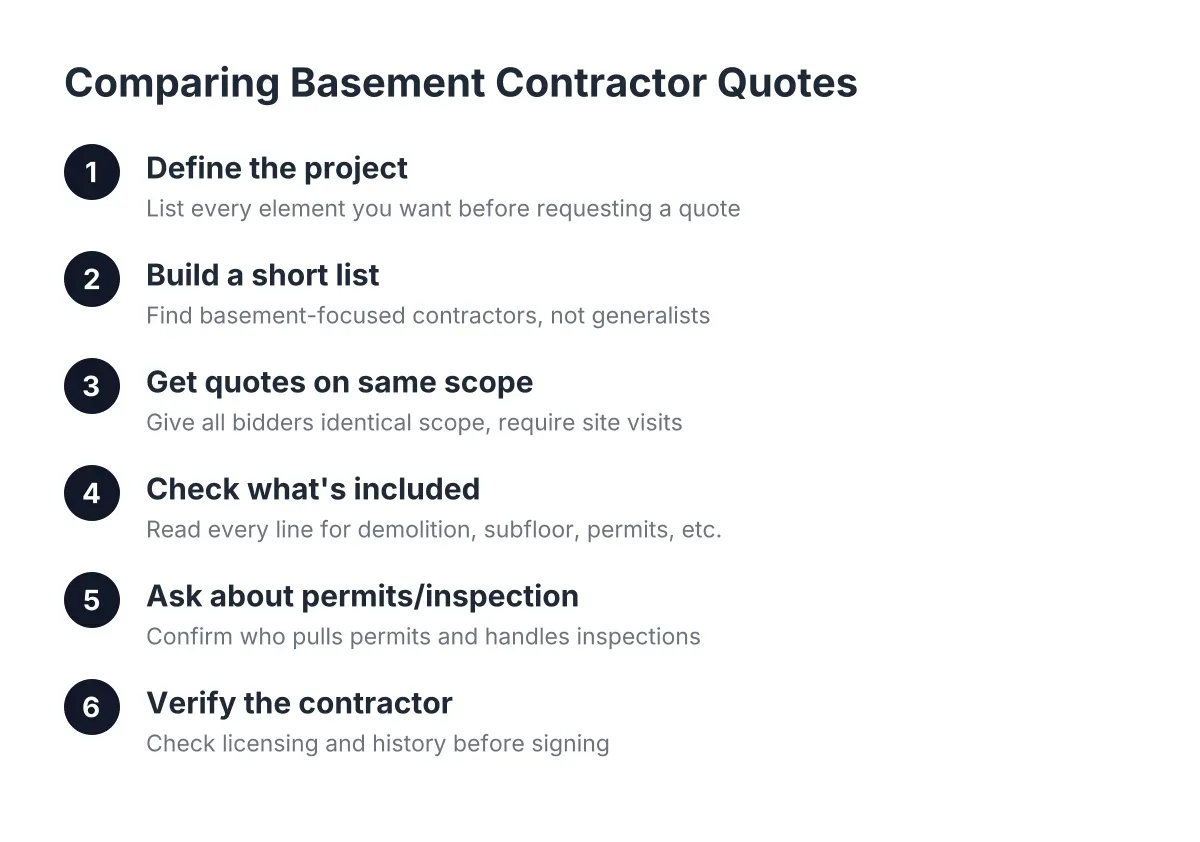
Write down what you actually want built before you request a single quote. A "finished basement" can mean drywall and carpet, or it can mean a wet bar with plumbing, a full bathroom, and a home theater wall. Those are wildly different projects, and if you describe them vaguely, every contractor will quote a different version of your basement.
Be specific about the pieces that drive cost. A basement bathroom addition means new plumbing runs and possibly breaking concrete. A basement bar means cabinetry, countertops, and often a sink. Heating the space means extending your HVAC or adding a separate heat source. List each element, even if you are not sure it fits the budget yet.
For example, suppose a couple in Kirkwood just closed on a 1960s ranch with an 900 square foot unfinished basement and a renovation budget earmarked from their loan. Their list might read: framed and drywalled main room, half bathroom, six-seat bar with sink, plywood subfloor, and carpet in the main area. That one paragraph gives every bidder the same target, which is the whole point.
Step 2: Build a Short List of Basement-Focused Contractors
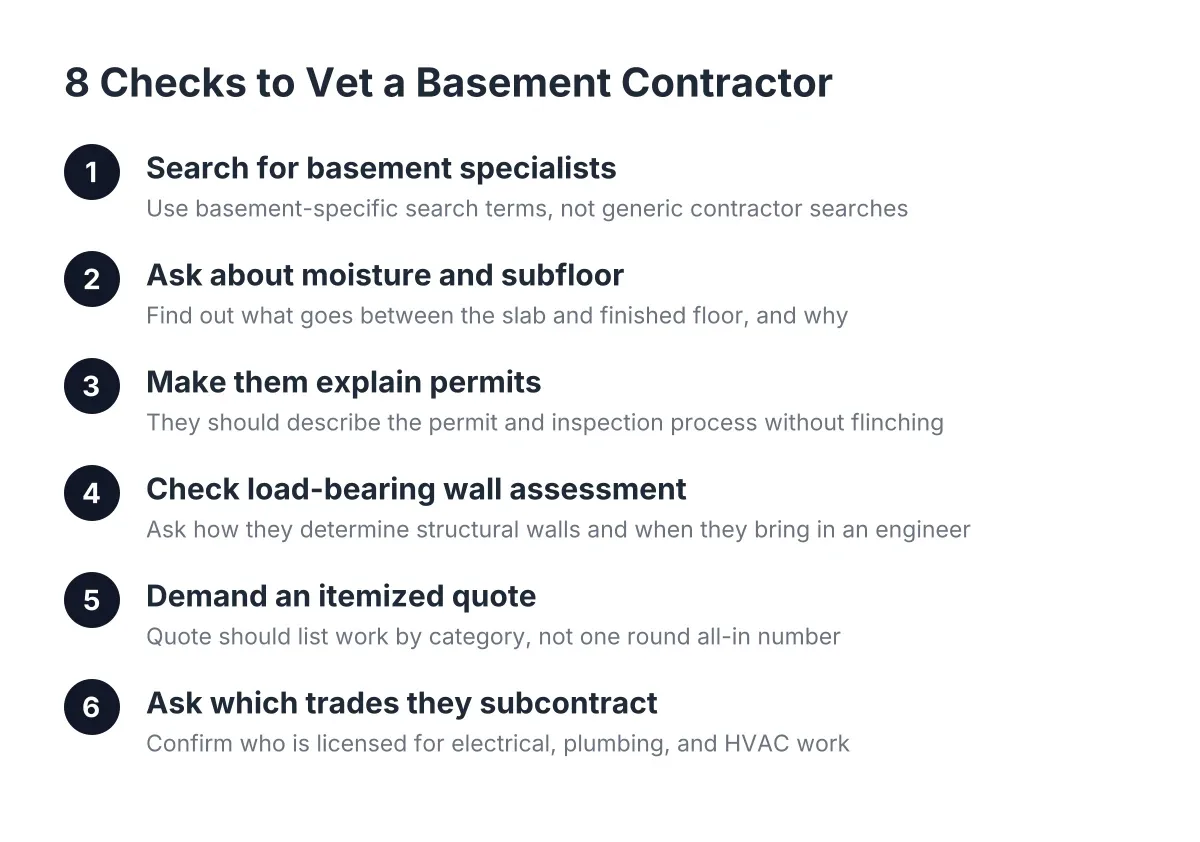
Search for a basement finishing contractor, not just any residential general contractor near me. Generalists who spend most of their year on kitchens and additions can build a basement, but basements have their own problems: moisture at the slab, load-bearing wall questions, low ceilings around ductwork, and egress rules. A contractor who finishes basements regularly has answers ready; a generalist may be figuring it out on your job.
Ask each candidate two screening questions before requesting a bid:
- How many basement finishes have you completed in St. Louis in the last two years, and can I see photos of a bar or bathroom build similar to mine?
- Who handles the electrical, plumbing, and HVAC work, and are those trades licensed?
That second question matters more than homeowners expect. Even contractors who self-perform framing and drywall commonly bring in a licensed electrician and HVAC contractor, because those trades require their own licensing and skill. A bidder who plans to do everything personally, including panel work, deserves a harder look.
If you have Pinterest boards full of basement bar ideas, show them during this call. A contractor who has built custom bars will react with specifics: what works with your ceiling height, where the sink drain can realistically go, what a wet bar adds versus a dry bar. A contractor who only does basic remodels will nod politely and stay vague. That reaction tells you plenty.
Step 3: Get Basement Contractor Quotes on the Same Scope
Give every bidder the identical written scope from Step 1, and ask each one to walk the basement in person. No serious contractor should price a basement finish from photos alone. The site visit is where they check the things that change the price: moisture signs at the slab, the condition of any existing framing, ceiling height under ductwork, and whether any wall in the plan is load-bearing.
Existing framing deserves special attention if your basement was partially finished by a previous owner. When old framed walls sit against the concrete with insulation stuffed behind them, it is often smarter to tear it out and start clean than to build on top of an assembly you cannot inspect. A good bidder will say so during the walkthrough, and their quote should state whether demolition is included.
Aim for three quotes. Two leaves you no tiebreaker; five drags the process out for weeks. When you get basement contractor quotes on a shared scope from three basement-focused companies, the differences that remain are meaningful: crew quality, materials, and how each one handles permits and inspections.
Step 4: Check What Each Quote Actually Includes
Read every line, and note what is missing as carefully as what is listed. The cheapest bid is usually cheapest because something got left out, not because the contractor found a discount. A complete basement finishing quote for a St. Louis project should address, in writing:
- Demolition and haul-away of any existing framing or debris
- Framing, including any load-bearing wall assessment or beam work
- Electrical rough-in and finish, with fixture counts and outlet locations
- Plumbing for a basement bathroom or bar sink, including drain routing
- Heating for the finished space, whether extended ductwork or another method
- Insulation and drywall, with finish level noted
- Subfloor, and specifically whether a plywood subfloor over the slab is included
- Flooring type by room, such as carpet in the living area and something harder at the bar
- Permits, and who pulls them
- Payment schedule tied to completed stages, not calendar dates
The subfloor line is where basement quotes diverge most often. Some bids put flooring straight on concrete; others include a plywood subfloor that adds warmth and a flatter, drier surface underfoot. Neither answer is automatically wrong, but you cannot compare a bid with a subfloor against one without it and call the second contractor cheaper. Moisture control below that floor matters too; a vapor barrier under a concrete slab exists to block moisture moving from the ground into the concrete, according to W. R. Meadows, and how a contractor plans to manage slab moisture should come up during the walkthrough.
Step 5: Ask the Permit and Inspection Question Directly
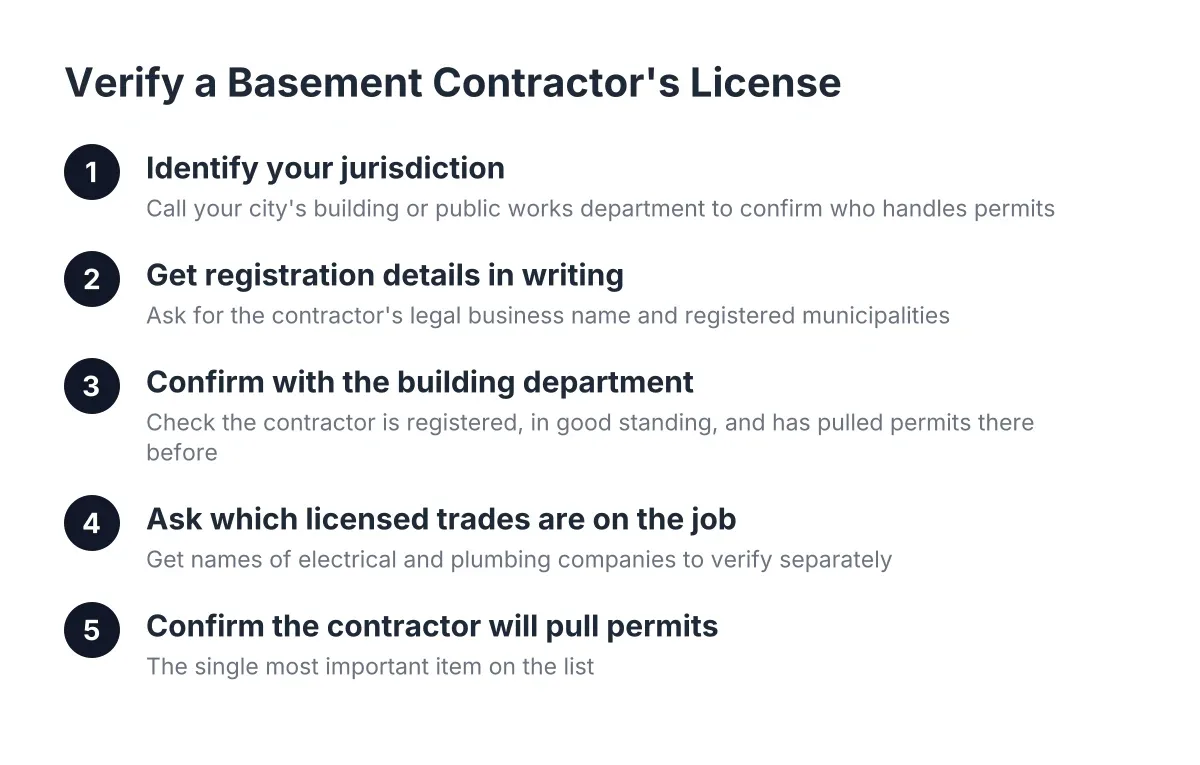
Ask each bidder plainly: do I need a permit for this, and who pulls it? In St. Louis, a basement finish that adds walls, wiring, or plumbing needs permits, and the honest answer from every bidder should be yes, we pull them, and the cost is in the quote. A contractor who suggests skipping permits to save money is transferring risk to you. Unpermitted work can complicate insurance claims and a future sale, which matters if you are a recent buyer already thinking about long-term value.
Inspections follow a sequence, and a contractor who describes it without prompting is showing you they have done this before. Basement projects typically involve an electrical rough-in inspection early, with an insulation inspection later, before drywall closes the walls. If a bidder cannot explain what gets inspected and when, that is a gap worth noticing before you sign anything.
Step 6: Comparing Basement Contractor Quotes Side by Side
Build a simple table with one row per scope item and one column per contractor. Mark each cell included, excluded, or unclear. This twenty-minute exercise does more to protect your budget than any negotiation tactic, because it turns three different documents into one comparison. When comparing basement contractor quotes in a side-by-side table, the gaps in coverage become immediately visible.
However, do not stop at price. Weigh three other factors for each bid:
- Specificity. Does the quote name materials, fixture counts, and finish levels, or does it say "finish basement" and a number? Vague quotes produce change orders.
- Allowances. If a bid includes an allowance for bar cabinets or bathroom fixtures, is the allowance realistic for what you showed them, or a placeholder that guarantees an upcharge?
- Process. Did they explain the permit sequence, the inspection points, and how they handle surprises like a hidden load-bearing wall or moisture at the slab?
In the hypothetical Kirkwood project from Step 1, say the three bids come back with the middle bid including the plywood subfloor and permits, the low bid excluding both, and the high bid including everything plus upgraded bar cabinetry. Once you add the missing items to the low bid at realistic prices, the middle bid is often the true low bid. That is the pattern the side-by-side table exposes.
One trade-off worth naming: a fully finished basement rarely returns its full cost at resale unless you commit to a high-end, complete renovation. If your goal is a space you will use for years, a bar for hosting, a bathroom that makes the lower level livable, that math works fine. If your goal is purely resale profit, talk it through with a real estate professional before spending.
Step 7: Verify the Contractor Before You Sign
Do the boring checks before the exciting signature. Confirm insurance with a current certificate sent directly from the insurer, not a photocopy. Ask for two references from basement projects finished in the last year, and actually call them; ask specifically whether the final price matched the quote and how change orders were handled. Confirm the contract includes a payment schedule tied to completed work stages, lien waivers at each payment, and a written change-order process.
Timing is one more honest conversation to have when hiring a contractor. If material prices are climbing sharply when you are ready to start, a straightforward contractor may tell you that waiting a season can be the smarter financial move rather than locking in a quote mid-spike. That advice costs them a sale, which is exactly why hearing it builds trust.
When to Handle Parts Yourself and When to Call a Pro
Some pieces of a basement finish are honest DIY territory for a handy homeowner. Basements forgive imperfect cosmetic work; painting, trim, and simple carpentry mistakes are rarely on display the way they would be in a kitchen. If you want to cut cost, ask each bidder whether you can handle demolition or painting yourself and how that changes the number.
The line is licensing and structure. Electrical, plumbing, HVAC, and anything touching a load-bearing wall belong with licensed trades and permits, full stop. Call a professional immediately if you see active water at the slab, cracks in foundation walls, or sagging in the floor structure above; those problems have to be solved before any finishing starts, and finishing over them buries the evidence.
Ready to Start Comparing Bids in St. Louis, MO
The homeowners who end up happy with their finished basement in 2026 are the ones who wrote a clear scope, got three quotes on that same scope, and read the exclusions as carefully as the totals. It takes a few extra weeks up front. It saves months of change-order arguments later.
If you are in the St. Louis, MO area and ready to put real numbers to your basement bar, bathroom, or full lower-level finish, reach out for an estimate. Bring your scope list and your questions about permits, subfloors, and cost per square foot; a walkthrough of your actual basement is where a vague idea becomes a quote you can act on.
If you need basement finishing, STL Basement Finishing can help.
Prefer to talk it through? Call (314) 916-6297 — a quick call is usually the fastest way to get a straight answer for your situation.