Concrete Basement Floor Paint: Prep, Application, and How Long It Actually Lasts
Concrete basement floor paint is one of the cheapest ways to make a bare slab look finished, but in a basement it lives or dies on moisture. A slab sits on the ground, and ground moisture pushes up through concrete year-round. Understanding how long a basement floor coating holds up is essential before you paint: damp a St. Louis slab without testing it first, and you will be scraping peeling paint within a season or two. This guide walks through the process step by step: testing the slab, prepping it correctly, applying the paint so it bonds, and setting honest expectations for how long the basement floor finish lasts compared to a true basement subfloor.
If you have had water in your basement before, this matters even more. Paint will not stop water, and it will not hide a moisture problem for long. The good news is that the testing steps below tell you, before you spend a dollar on paint, whether your slab is a candidate at all.
Step 1: Test the Slab for Moisture Before You Buy Anything
Can I paint a concrete basement floor? You can paint most concrete basement floors, but only after confirming the slab is not actively transmitting moisture. A simple plastic sheet test tells you in 24 to 48 hours whether vapor is pushing up through the concrete. If moisture appears under the plastic, paint will peel, and you need to solve the moisture issue first.
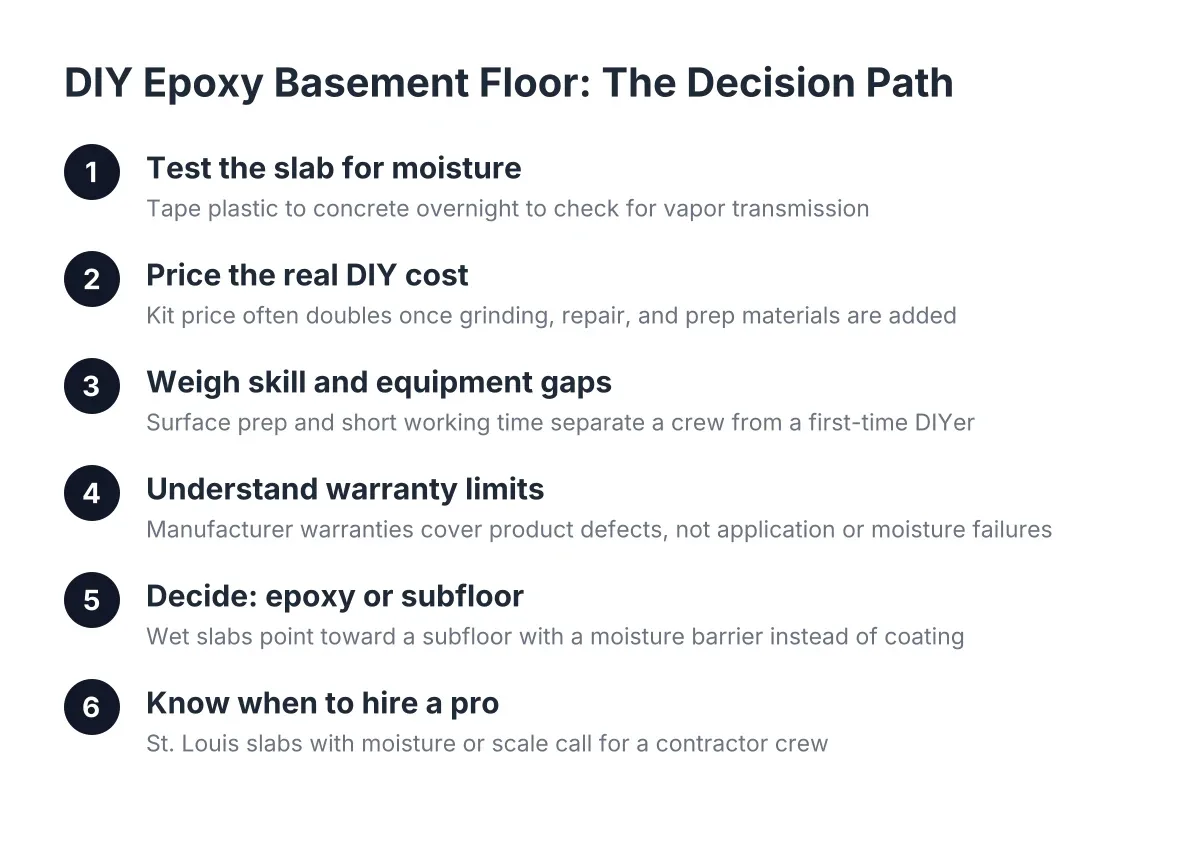
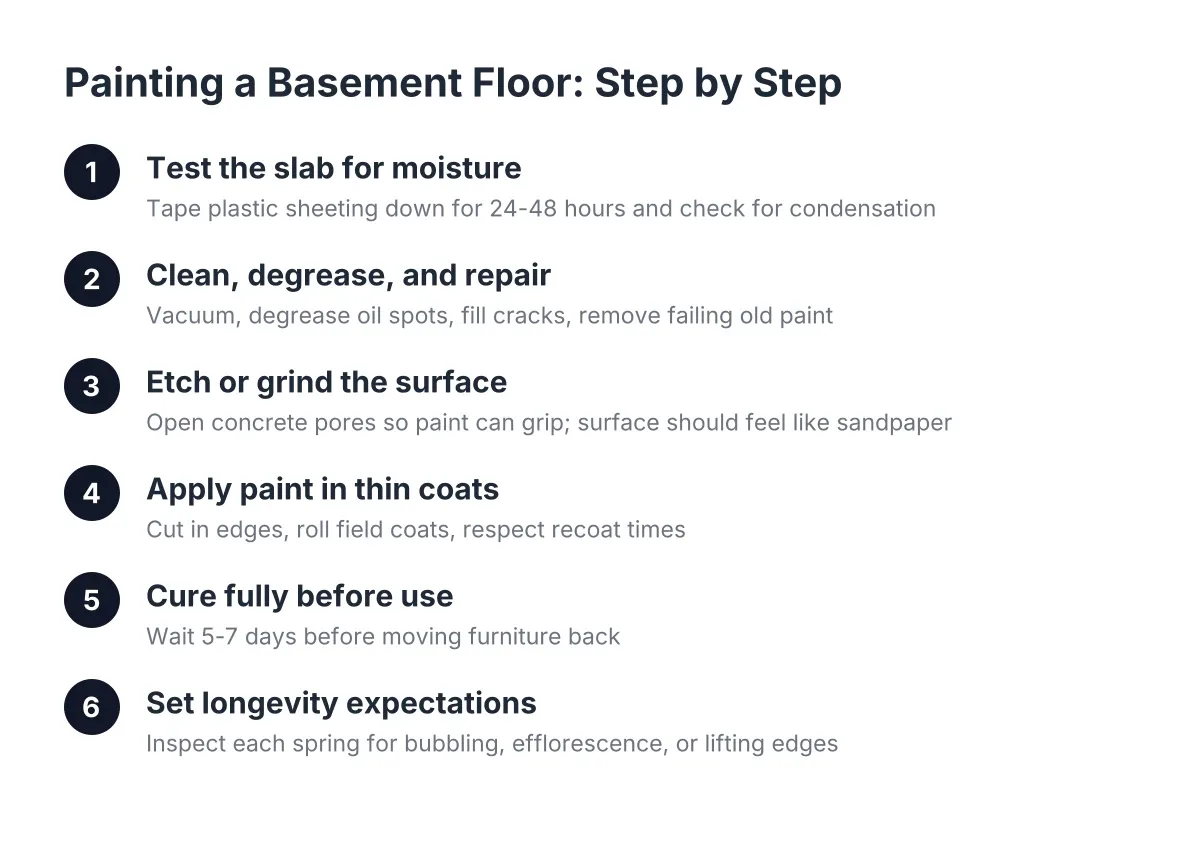
Here is the test. Tape a two-foot square of clear plastic sheeting to the slab, sealing all four edges with duct tape. Leave it for 24 to 48 hours, ideally after a rainy stretch, since St. Louis clay soil holds water and pushes vapor up hardest then. Then lift it and look.
- Dry plastic and dry concrete underneath: the slab is a reasonable candidate for paint.
- Condensation on the underside of the plastic, or darkened concrete: vapor is coming through. Stop here.
- Standing droplets or a visibly wet slab: you have an active moisture problem that paint cannot fix.
Newer homes often have a vapor barrier under the slab, which is designed to block moisture transmission from the ground into the concrete above, according to W. R. Meadows. Older St. Louis homes frequently do not; open an old slab and you may find nothing but dirt and clay beneath it. If your plastic test fails, the fix is drainage, grading, or waterproofing work, not a thicker coat of paint. That is a separate conversation with a contractor, and it comes before any finishing.
Step 2: Clean, Degrease, and Repair the Concrete
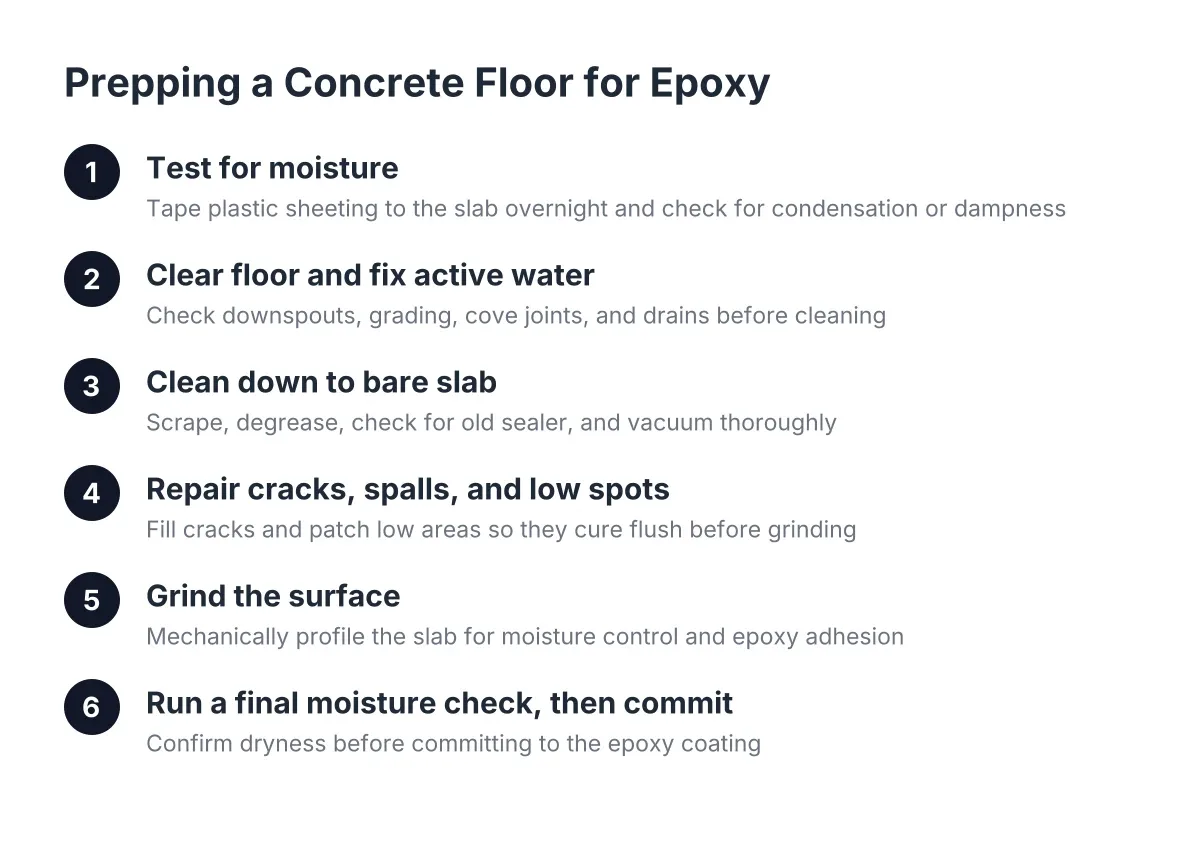
Paint bonds to clean, sound concrete and nothing else. Sweep and vacuum the whole slab, then scrub any oil spots with a concrete degreaser. Old slabs near a furnace or laundry area usually have spots you cannot see until they repel the first coat.
Next, deal with cracks and spalling. Fill hairline cracks with a concrete crack filler rated for floors. For larger patches, a sand mix produces a smoother, more finished surface than standard concrete mix, which matters when the patch will show through a painted finish. Let all repairs cure fully per the product label before moving on.
If a previous owner already painted the floor, test the old coating. Score an X through it with a utility knife, press tape over the cut, and rip it off. If paint comes up with the tape, the old coating has to come off by grinding or stripping before new paint has any chance.
Step 3: Etch or Grind So the Paint Can Grip
Smooth troweled concrete is too slick for paint to bond. You have two options: acid etching or mechanical grinding. Etching with a diluted concrete etcher opens the pores of the slab; you apply it, scrub, rinse thoroughly, and let the floor dry completely, which can take two to three days in a humid basement. Grinding with a rented floor grinder is faster and more reliable, but dustier.
After etching, the surface should feel like fine sandpaper. If it still feels smooth and glassy, repeat the process. Skipping this step is the single most common reason painted basement floors peel in the first year.
Step 4: How Long Basement Floor Paint Coatings Last
Choose a paint made for concrete floors, not wall paint and not porch paint rated only for above-grade use. Masonry and concrete floor coatings are formulated to tolerate some alkalinity and vapor; standard latex is not. Whatever product you pick, the application rules are the same.
- Check the slab temperature and humidity against the label. Most products want the slab above 50 degrees and the basement dehumidified.
- Cut in the edges with a brush, then roll the field with a 3/8-inch nap roller on an extension pole.
- Apply thin coats. Two thin coats bond better than one heavy coat, which skins over and traps solvent.
- Respect recoat times exactly. Rushing the second coat is the second most common cause of peeling.
- Wait the full cure time, often five to seven days, before moving furniture or appliances back.
Expect the first coat to soak in unevenly on an older slab. That is normal. The second coat evens out the color. If you want ideas, light gray and greige tones hide dust and efflorescence better than dark colors, which show every footprint and chalky mineral deposit.
Step 5: Set Realistic Longevity Expectations
On a dry, properly prepped slab used as light storage or utility space, a quality concrete floor coating commonly holds up for several years before it needs touch-up. On a slab with any vapor transmission, or under heavy traffic and dragged furniture, peeling can start within months. Paint is a maintenance finish, not a permanent one, and how long basement floor protection lasts depends heavily on moisture conditions and use.
Plan to inspect the floor each spring, especially after the heavy rains that soak St. Louis in March and April. Look for bubbling, chalky white efflorescence bleeding through, or edges lifting near the walls. Catch a small failure early and you can scuff, spot-prime, and recoat a section in an afternoon. Ignore it and water vapor will work under the whole film.
One honest trade-off: paint adds no warmth, no cushioning, and no protection for anything you build on top of it. It is a surface treatment on a cold concrete subfloor, nothing more.
Step 6: Decide Where Paint Ends and a Subfloor Begins
Paint is the right call for utility rooms, workshops, and storage areas. In fact, coating the floor of a basement utility room helps contain concrete dust so it does not migrate into finished living space every time the door opens. For a playroom, guest bedroom, or home office, paint falls short, and that is where basement subfloor installation earns its cost.
Suppose a family in South St. Louis County wants to turn 600 square feet of basement into a playroom and guest room. Say they have had water in that basement once, three years ago, after a storm. Painting that slab and laying an area rug might cost them a few hundred dollars in materials, but one wet spring could ruin the rug and lift the paint. In that scenario, a dimpled-membrane subfloor panel raised slightly off the concrete makes more sense. It lets water vapor under the floor migrate to drier zones and escape instead of accumulating under a finished surface. Even in a home with a vapor barrier under the slab, a subfloor system protects a finished renovation from future moisture events in a way paint never will.
A few rules of thumb for drawing that line:
- Paint the areas that stay unfinished: utility room, workshop, under-stair storage.
- Install a plywood subfloor over a raised membrane anywhere you plan carpet, finished flooring, or framed walls.
- Use pressure-treated lumber for any bottom plate that contacts the concrete, since treated wood resists moisture and rot where regular lumber fails.
- If walls will sit on a floating subfloor, follow the subfloor manufacturer's framing recommendations so moisture behind the walls can still dry.
The cost to paint a concrete basement floor depends on square footage, how much prep the slab needs, and whether old coatings have to come off. It will always run less than a subfloor, because it does less. The question is not which is cheaper; it is which one matches how you plan to use the space.
When to Bring in a Pro Instead of Painting Over the Problem
If your plastic sheet test fails, if the basement smells musty after rain, or if you have had standing water, do not paint and hope. A contractor who takes moisture seriously will walk the slab, check grading and gutters outside, and tell you plainly whether the basement is dry enough to finish or what has to happen first. Load-bearing wall changes, bathroom additions, and most finishing work in St. Louis, MO also require a permit, so the planning conversation should cover that too.
For a homeowner who has been burned before, the test is simple. Any contractor, or any coat of paint, that skips straight past moisture is covering a problem, not fixing one. Run the tests in Step 1 before you spend money on concrete basement floor paint, and you will know which path your slab actually supports.
If you need basement finishing, STL Basement Finishing can help.
Prefer to talk it through? Call (314) 916-6297 — a quick call is usually the fastest way to get a straight answer for your situation.