Basement Finishing Warranty Guarantees: What St. Louis Contractors Should Cover
If you are about to sign a contract to finish your basement, the basement finishing warranty coverage page deserves as much attention as the price. Basement finishing warranty guarantees vary widely from one contractor to the next, and in St. Louis, MO, where basements deal with real moisture and real clay soil, the difference matters. This FAQ walks through what a solid warranty should cover, what it will not, and the questions to ask before you sign.
This is written for the homeowner who is past the browsing stage. Maybe you just closed on a house with an unfinished lower level, or you are converting the basement into an in-law suite or rental space. Either way, you want the work protected after the crew leaves.
What do basement finishing warranty guarantees actually cover?
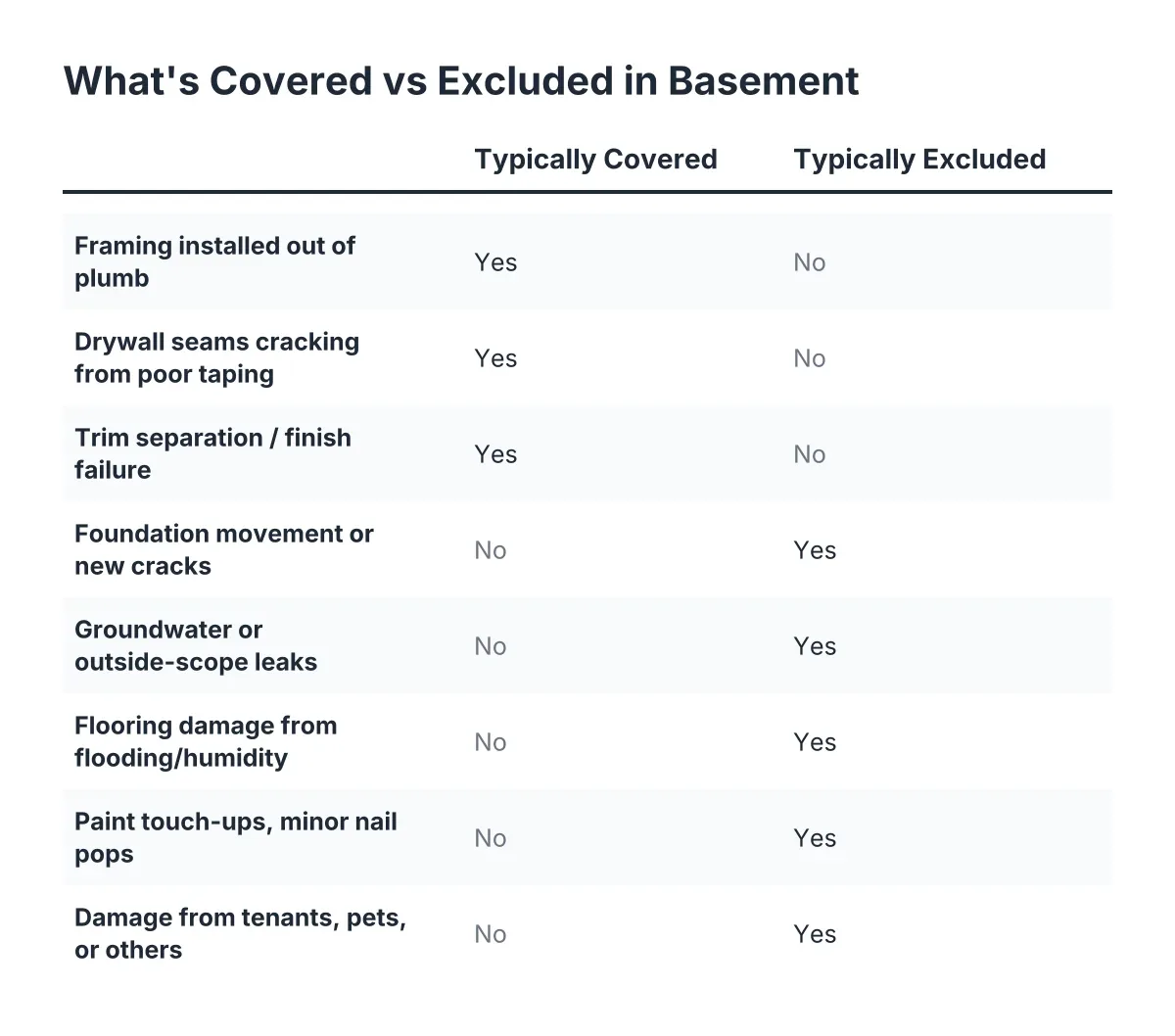
A basement finishing warranty typically covers workmanship, meaning defects in how the contractor built the space. That includes framing that was installed out of plumb, drywall seams that crack from poor taping, trim that separates, and finish work that fails under normal use. Materials usually carry separate manufacturer warranties that pass through to you.
In practice, a warranty splits into two layers. The contractor's workmanship warranty covers labor and installation. Manufacturer warranties cover the products themselves, such as flooring, fixtures, and subfloor panels. A good contractor will tell you which layer applies before you ever need to make a claim, so you understand the basement finishing warranty coverage for both workmanship and products.
Ask for both in writing. A verbal "we stand behind our work" is not a warranty; it is a sentence.
How long should a workmanship warranty last on a finished basement?
One to two years is a common workmanship warranty length for basement finishing, with some contractors offering longer coverage on structural elements like framing. The first year matters most because that is when a basement goes through a full St. Louis cycle of humid summer and dry winter heating season. Most workmanship defects show up in that window.
Be cautious about headline numbers. A "lifetime" warranty with narrow coverage and heavy exclusions can protect you less than a plain two-year workmanship warranty that covers everything the contractor touched. Read what is covered, not just how long.
What is usually excluded from basement finishing warranty coverage?
Water intrusion from the foundation is the most common exclusion in a basement finishing warranty. A finishing contractor builds the living space; they do not control groundwater, foundation cracks, or a sump pump that fails during a spring storm. Normal wear, homeowner modifications, and damage from humidity you control (like running no dehumidifier) are also typically excluded.
Common exclusions to expect:
- Foundation movement, settling, and new foundation cracks
- Groundwater or plumbing leaks that originate outside the contractor's scope
- Flooring damage from flooding or sustained high humidity
- Paint touch-ups and minor drywall nail pops after the first season
- Damage caused by tenants, pets, or later remodeling by others
For a rental conversion, that last point matters. If a tenant damages drywall or flooring, that is a landlord insurance question, not a warranty claim.
Does finishing the basement void a waterproofing or foundation warranty?
Finishing a basement can void an existing waterproofing or foundation repair warranty if the finish work blocks access to the system or if someone other than the original company alters it. If your St. Louis home came with a transferable waterproofing warranty from a prior owner, read it before framing starts. Some require inspection access to drain tile, sump pits, or wall crack repairs.
A careful basement finishing contractor plans around this. For example, standard practice around a previously repaired foundation crack is to leave an access panel or an open section of wall near the crack. That keeps the crack visible so it can be re-measured over time, and it keeps your waterproofing warranty intact.
This is one of the clearest trust signals when comparing bids. A contractor who asks about your existing foundation and waterproofing warranties before quoting is thinking past the drywall.
How do moisture and subfloor choices affect warranty coverage?
Subfloor decisions directly affect what a contractor is willing to warrant, because moisture is the main thing that kills a finished basement. A plywood subfloor or subfloor panel system lifts finished flooring off the concrete slab, which protects carpet or hardwood from minor moisture events. Many contractors will warrant flooring installed over a proper subfloor more confidently than flooring glued straight to concrete.
Even a slab poured over a vapor barrier benefits from a subfloor system. According to W. R. Meadows, a vapor barrier under a concrete slab is meant to block moisture transmission from the ground into the concrete above; it is a first line of defense, not a promise the slab stays dry forever. A subfloor adds a second layer of protection for the finished space.
Therefore, if a bid skips the subfloor to hit a lower price, ask how that choice changes the flooring warranty. The honest answer is usually that it narrows it.
Do permits and inspections strengthen basement finishing warranty guarantees?
Yes. Permitted, inspected work gives basement finishing warranty guarantees real backing, because inspections verify the stages you cannot see after drywall goes up. A typical finish in St. Louis, MO involves an electrical rough-in inspection and a later insulation inspection before walls close. Those sign-offs document that the hidden work met code at the time it was built.
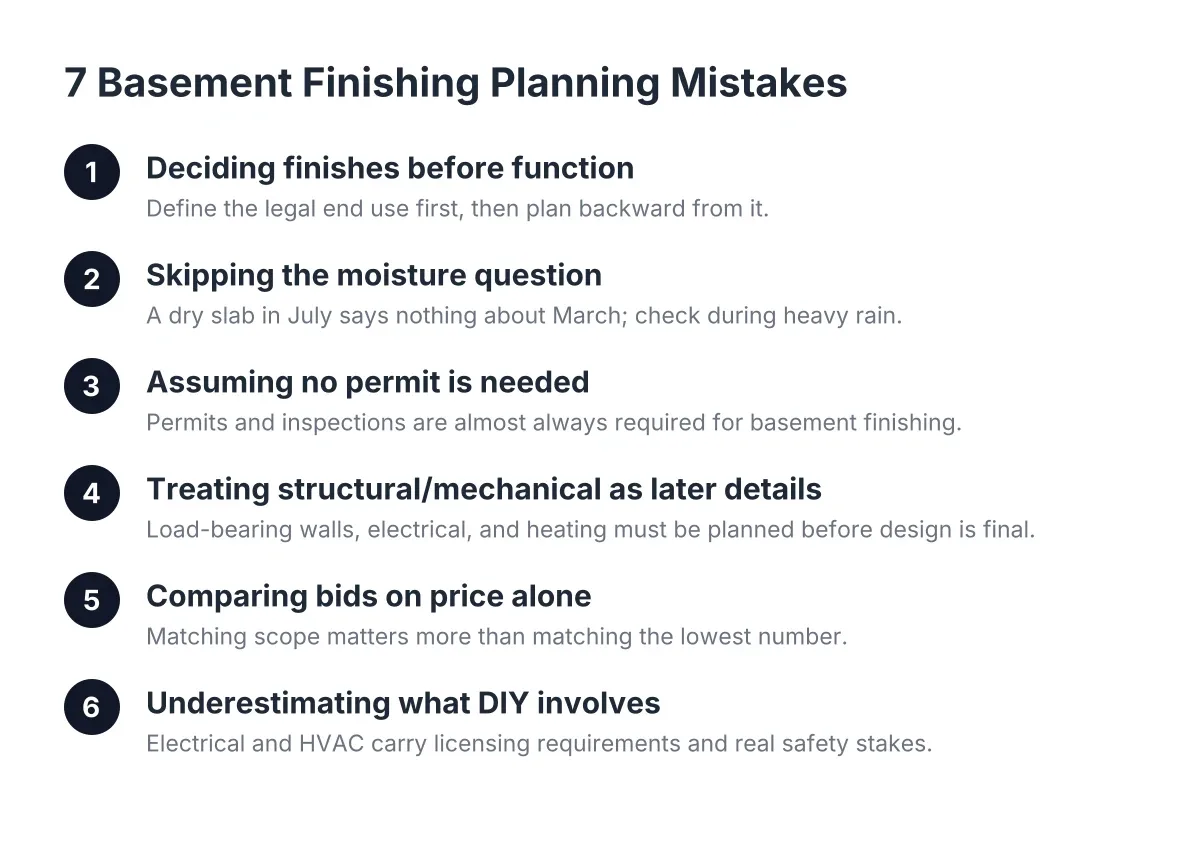
For a rental-income conversion, permits are not optional. A basement apartment or in-law suite needs to meet legal living space requirements, including egress, and an unpermitted finish can block you from renting the space legally or complicate a future sale. A warranty on unpermitted work protects you on paper and fails you at the city counter.
In addition, electrical and HVAC work belongs with licensed trades even on projects where some finish work is handled in-house. Wiring choices have code implications; for example, the National Electrical Code (NFPA 70) treats non-metallic sheathed cable run inside EMT conduit as against code in damp or wet locations. Inspections catch exactly this kind of issue before it hides behind a wall.
What warranty questions should I ask a St. Louis basement remodeling contractor?
Ask every St. Louis basement remodeling contractor you interview the same short list, and compare the answers in writing. The goal is to find out who honors claims, not just who prints a warranty page.
- How long is the workmanship warranty, and what does it exclude?
- Who handles manufacturer warranty claims on flooring, fixtures, and materials, you or me?
- How will you protect my existing waterproofing or foundation warranty during the finish?
- Will the project be fully permitted and inspected, and will I get copies?
- If the basement becomes a rental, does tenant occupancy change the coverage?
- What does a warranty claim look like in practice, and who shows up to fix it?
Suppose a homeowner in South County buys a house with an unfinished basement and budgets around $35,000 to convert it into a suite with a basement bathroom for an adult child, with plans to rent it later. In that scenario, question three and question six matter most. The bathroom adds plumbing near the slab, and a future tenant means the space has to hold up under daily use by someone who did not pay for it.
Are basement finishing guarantees the same as a dry basement guarantee?
No. A basement finishing warranty covers the construction of the finished space; a dry basement guarantee comes from a waterproofing company and covers water management systems like drain tile and sump pumps. They are different documents from different trades, and neither replaces the other.
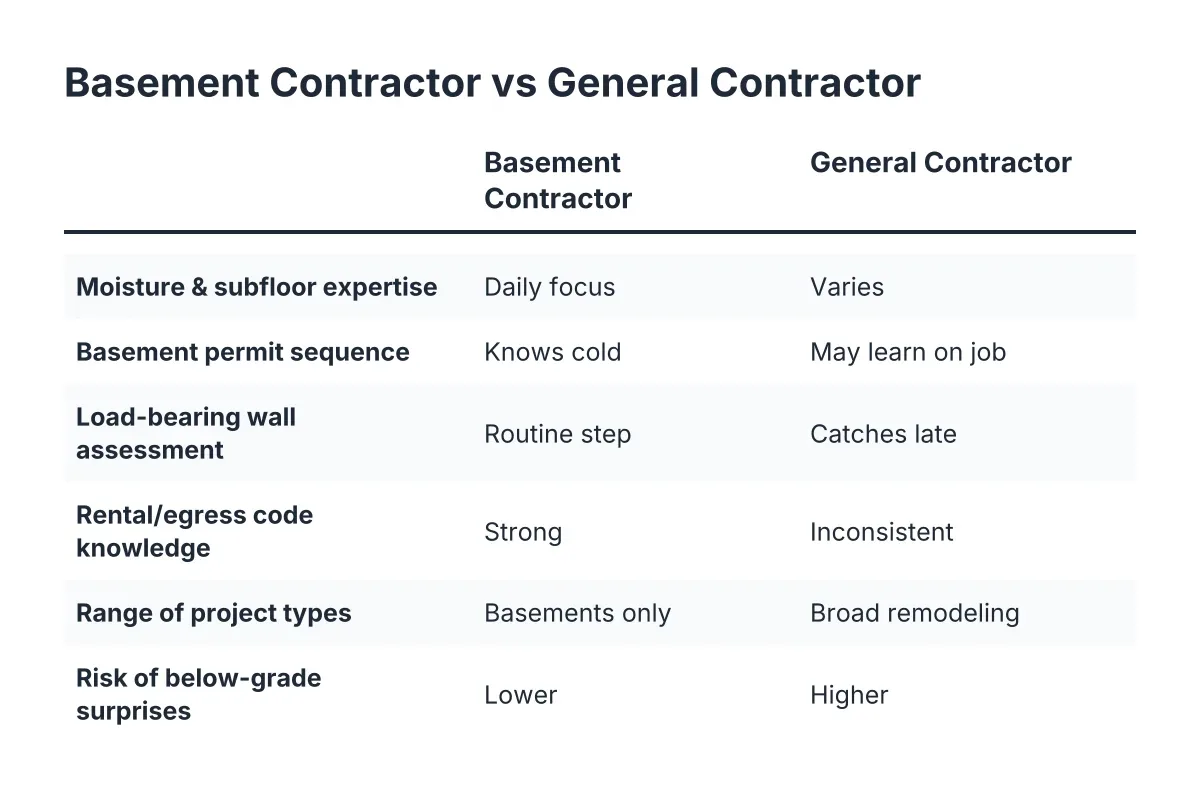
This distinction trips up a lot of homeowners comparing bids. If keeping water out is the open question, solve that first with a waterproofing or foundation professional, then finish. A finishing contractor can assess load-bearing walls, framing, subfloor, and heating; active water problems sit outside that scope, and a reputable one will say so instead of papering over it with warranty language.
The bottom line for St. Louis homeowners
Basement finishing warranty guarantees are only as good as the contractor's willingness to put scope, exclusions, and claim process in writing. Look for a clear workmanship term, pass-through manufacturer warranties, permits with documented inspections, and a plan that protects any existing foundation or waterproofing coverage.
A contractor confident in their framing, drywall, subfloor, and finish work does not hide behind fine print. In a decision between two similar bids, the one with the plainer, more specific warranty is usually the one that built it to last.
If you need basement finishing, STL Basement Finishing can help.
Prefer to talk it through? Call (314) 916-6297 — a quick call is usually the fastest way to get a straight answer for your situation.