Bathroom Addition ROI: Does a Basement Bathroom Increase Home Value in St. Louis, MO?
If you are weighing a basement bathroom against other projects, the real question about bathroom addition ROI is this: does a below-grade bathroom pay you back when you sell, or does it just make the basement nicer to live in? For homeowners in St. Louis, MO, the honest answer is both, with conditions. A basement bathroom adds real resale value only when the plumbing is done right, the moisture problem underneath it is solved, and the work is permitted and inspected so a buyer's inspector and your realtor have nothing to flag. Understanding how a basement bathroom affects resale value is essential to making the right decision for your home.
This guide walks through the decision the way a contractor would walk you through it at your kitchen table. Follow the steps in order. Each one either strengthens your return or protects you from the mistakes that erase it.
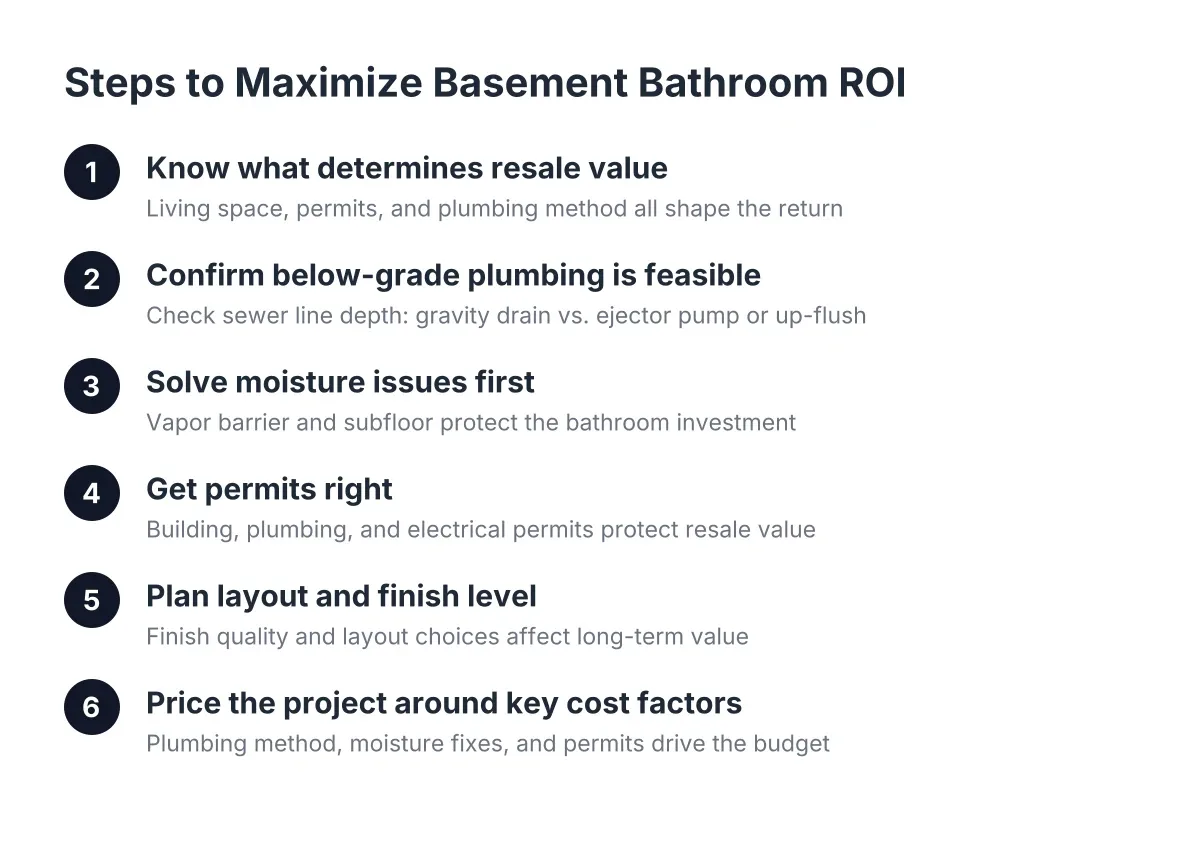
Step 1: What Determines Basement Bathroom Resale Value
Bathroom addition ROI in a basement depends on three things: whether the bathroom makes the lower level count as real living space, whether the work is documented and permitted, and whether the plumbing method you choose holds up over time. A basement bathroom rarely returns dollar for dollar on its own, but it multiplies the value of everything else you finish down there.
Here is the part most ROI articles skip. A finished basement without a bathroom is a bonus room. A finished basement with a bathroom is a usable second living level; it can host guests, support a basement bar, or serve a future bedroom. Buyers in St. Louis price those two things differently.
Be realistic, though. Finished basement space generally returns less per dollar than above-grade remodeling, and a halfway finish can return less than a committed one. The resale value of a basement bathroom is strongest when you plan to do the whole job correctly rather than the cheapest possible version.
Step 2: Confirm the Bathroom Can Actually Be Plumbed Below Grade
Before you think about tile or vanities, find out where your main sewer line exits the house and how deep it runs under the slab. This single fact determines your plumbing method, a large share of your cost, and part of your return.
There are two main paths:
- Gravity drainage. If the sewer line is deep enough below the slab, your contractor can break the concrete, tie new drain lines into it, and let gravity do the work. This is the preferred method where it is feasible, and it is what buyers and inspectors expect to see.
- An ejector pump or up-flush system. If the sewer line sits above the level of the new fixtures, waste has to be pumped up to it. A sewage ejector pit under the slab handles a full bathroom, including a basement shower. A macerating up-flush unit, often called a Saniflo toilet, grinds waste and pumps it through small-diameter pipe without major slab work.
For resale, a properly installed ejector pit reads as standard construction. A Saniflo toilet works and can be the right call in tight retrofits, but some buyers and inspectors view pumped systems as a maintenance item, so factor that into your ROI thinking. In many older St. Louis homes, the builder left a capped rough-in near the sewer stack; if you have one, your plumbing cost drops and your return improves.
Step 3: Solve the Moisture Problem Before You Finish Anything
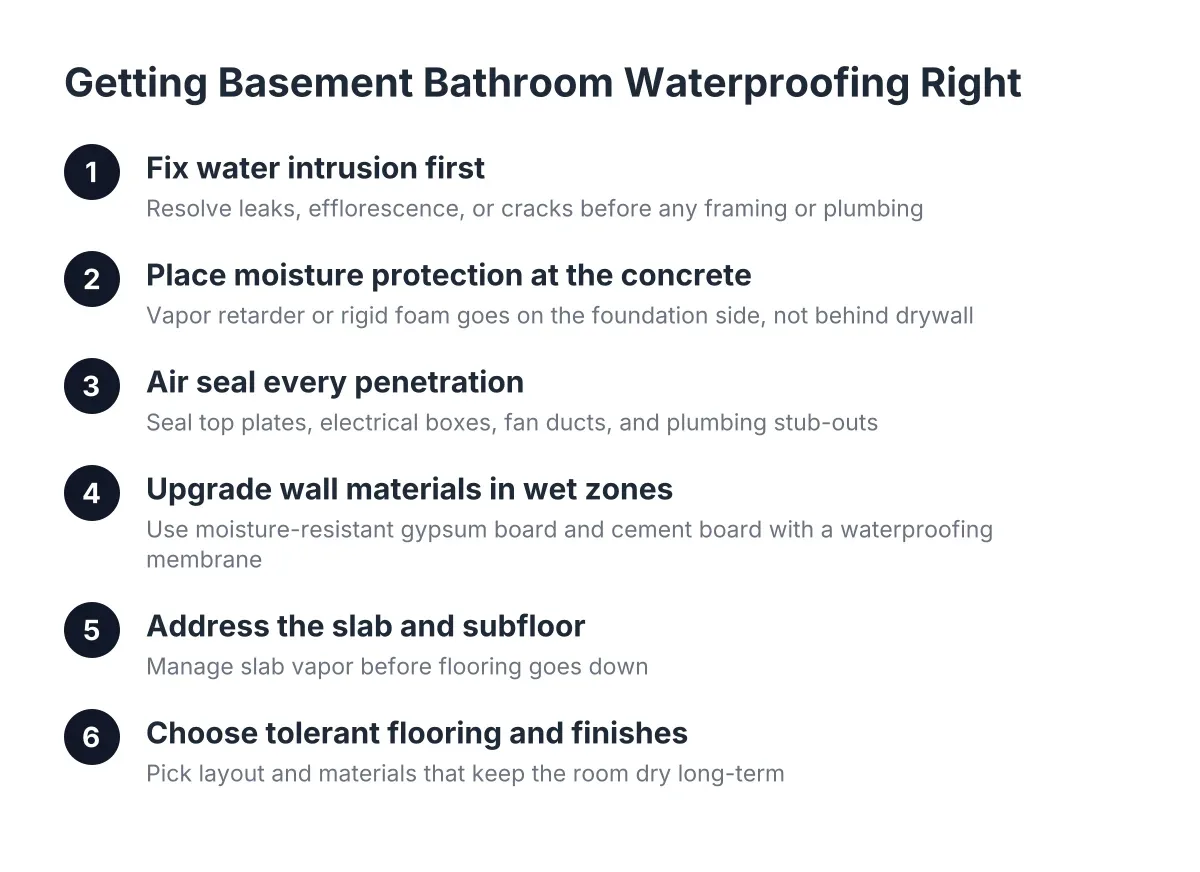
Nothing destroys the return on a basement bathroom faster than water. If your basement has ever taken on water, smells musty in August, or sits in a high-water-table part of the St. Louis metro, fix that first. A beautiful bathroom over a wet slab is a liability, not an asset, and a buyer's inspector will find the evidence.
Start with the slab itself. A vapor barrier placed over the base course under a concrete slab is meant to block moisture transmission from the ground into the concrete above, according to W. R. Meadows. Many older homes in the area were built without one, which is why their slabs sweat and their carpets smell.
However, even a basement with a vapor barrier under the slab can still benefit from a subfloor system over the concrete. A raised plywood subfloor with a moisture-rated underlayment gives the finished floor an air gap and a second line of defense against future water events. For a bathroom, that protection matters even more, since you are adding supply lines, a drain, and a basement shower to the wettest room in the house.
Address the root cause too: grading, gutters, cracks, or drainage. A contractor worth hiring will tell you plainly if moisture work has to come before finish work, even when that is not the answer you wanted.
Step 4: Get the Permits Right, Because Resale Value Depends on Them
This step is where permit-anxious homeowners are right to be anxious, and it is also where you protect the most value. Yes, a basement bathroom needs a permit. In the St. Louis area, adding a bathroom typically involves building, plumbing, and electrical permits, with inspections at rough-in and at final. The specifics differ between St. Louis City and St. Louis County, which is why online answers seem to contradict each other; they are describing different jurisdictions.
Here is why this matters for ROI. Suppose a homeowner in South County finishes a basement with a full bath, never pulls permits, and lists the house five years later. The buyer's inspector notes the bathroom, the realtor asks for permit records, and none exist. In that scenario the seller faces three bad options: retroactive permitting with walls opened for inspection, a price concession, or a buyer who walks. The unpermitted bathroom did not add value; it subtracted it.
Therefore, treat permits as part of the return, not an obstacle to it:
- Hire a contractor who pulls the permits in their own name and says so before you sign anything.
- Be skeptical of anyone who says "we don't usually need one" for a bathroom. That is not a gray area; plumbing and electrical work on a new bathroom requires permits and inspections.
- Keep the final inspection records. Signed-off permits are the paperwork that lets a future appraiser and buyer credit the bathroom at full value.
Permits add some time and cost, and the amounts vary by jurisdiction and project scope. Compared to the resale risk of unpermitted work, they are cheap insurance.
Step 5: Basement Bathroom Layout, Finish Level, and Resale Value Considerations
Place the bathroom where the plumbing wants to go, not where the floor plan looks prettiest. Locating it near the existing sewer stack or the capped rough-in shortens drain runs, reduces slab cutting, and lowers cost without lowering value. Near the stairs is often ideal, since guests using a basement bar or family room can reach it without crossing bedrooms or storage.
Match the finish level to the space around it. A full bathroom with a basement shower supports a guest suite or future bedroom; a half bath is enough for a bar and media area. Either way, use moisture-tolerant materials: a proper subfloor, cement board behind tile, and good ventilation to the exterior, since basement bathrooms have no window to crack open.
In addition, budget honestly for the details. Trim work, baseboard, casing, and paneling in a finished basement adds up to far more linear footage than most homeowners expect, and a bathroom door and casing are part of that count. Consistent finishes, like matching paint colors between the bathroom vanity and the surrounding basement, read as higher-end work to buyers even though they cost little extra.
Step 6: Price the Project Around the Factors That Move the Number
A basement bathroom addition does not have one price, because the big cost drivers vary house to house. Instead of chasing a single number online, walk your basement with these factors in mind:
- Drain access. An existing rough-in is the cheapest path; cutting the slab for new gravity lines costs more; an ejector pit or Saniflo system changes the equation again.
- Moisture and subfloor work. Vapor mitigation, drainage fixes, and a plywood subfloor system add cost up front and protect the whole investment afterward.
- Full bath versus half bath. A shower adds waterproofing, tile, glass, and ventilation that a powder room does not need.
- Permits and inspections. Fees and timelines vary between St. Louis City and St. Louis County and by project scope.
- Finish level. Builder-grade fixtures and a custom tiled shower sit at opposite ends of the budget.
One timing note: when material prices are climbing sharply, waiting a season for them to stabilize can be smarter than starting mid-spike. Your return depends on what you paid in, not just what the bathroom appraises for.
Does the ROI of a Basement Bathroom Addition Make the Project Worth It?
For most St. Louis homeowners finishing a basement, yes, a bathroom is worth adding, with one caveat. The strongest case for bathroom addition ROI does not come from the bathroom alone; it comes from the bathroom turning the whole lower level into space buyers count as livable. Skip it, and the rest of the finished basement earns less. Build it without permits or over an unsolved moisture problem, and it can cost you at the closing table.
One honest limitation: if your home has active foundation movement or unresolved structural issues, finishing work should wait until a structural professional has evaluated the problem. No bathroom pays back enough to justify building over a failing foundation.
Get the sequence right—plumbing feasibility, moisture, permits, layout, and budget—and a basement bathroom becomes one of the few below-grade investments that both improves daily life and holds up under a buyer's inspection in 2026 and beyond.
If you need basement finishing, STL Basement Finishing can help.
Prefer to talk it through? Call (314) 916-6297 — a quick call is usually the fastest way to get a straight answer for your situation.